


Archive for the ‘Uncategorized’ Category
Going into new territory
By: myadmin • November 14, 2019
ROOTS last Friday had a community dialogue on TOP with the Muslim community at Stapleford for the first time!
Deliberations unmasked many topical issues and some of them being that abortions are happening and conducted in unsafe ways and that most girls and women are selling sex and pregnancy isn’t good for business.
Some of the young girls are indulging at a young age and end up getting pregnant and because of wanting to conform to community norms they abort unsafely.There is also inadequate contraception and girls and women get unintended pregnancies which end in unsafe abortions.
Evidence is there that women and girls are dying we need the government to legalise safe termination of pregnancies because we keep losing lives and PAC is not adequately provided because the economic situation is bad and the state of hospitals is pathetic.

Of SDP- Youth Interface Meetings
By: myadmin • November 14, 2019
This November is turning out to be a busy month for us. Last week we had SDP and youth interface meetings in Gandanzara ,Rusape.
The meeings revealed that service provider attitudes are a barrier for young people to access SRHR services as well as the distance that is there from their homes to the clinic because they do not have money.
The service providers really need to provide services that young people seek and maintain confidentiality since young people wouldn’t want their information shared especially with their parents.The sister in charge present during all meetings; committed to organize a meeting with service providers and CCW/VHW to discuss and address the issues that came from young people.

Men’s Sports Gala
By: myadmin • November 11, 2019
A men’s wellness sports gala was held at Jumbo stadium in Mazowe on the first day of November and all the three participating wards under culture actions took part in a soccer tournament. It went a long way in spreading our three focus areas as more than 500 people attended the event. In regards sexual reproductive health partners, there were teams from the ministry of health and the Zimbabwe National Family planning Council who were in attendance offering HIV testing, STI screening and Condom distribution for attendees. Participants also got access to family planning information.
Key observations were that the men generally accept that GBV is a reality and is usually perpetrated by themselves. It is however worrying that some actually defend it for various reasons amongst them being the need to show authority and also not to negotiate for sexual intercourse and other areas they regard as the husband’s right or authority in the marriage.
It was also clear that some women actually defend the violence perpetrated on them by their partners thereby making it difficult for the men to grasp the ills of this mishap.
In general the men and women seemed cognizant of the impending threat of climate change and the inevitable chain reaction caused by its outcomes and were mostly agreeable to taking responsibility for their environment but reiterated the need for sustainability projects in order to better their chances with alternatives in terms of livelihoods.
Most men who attended and participated at the gala appreciated the negative side of child marriages and thanked the culture actions program for bringing awareness on the issue and becoming a beacon of hope in fighting it. However they noted the difficulties in ending it due to strong drivers such as poverty and early sexual activity by teens caused by lack of recreational and educational activities such as these sporting galas.
The Community change maker awards ceremony sparked a major interest among attendees as they sought to hear the stories behind those who were receiving awards. This enticed most of them to want to also walk the road of change which the awarded beneficiaries had walked ,a story of change as it was being called on the day.

NEAPACOH Meeting
By: myadmin • November 5, 2019
On the 18th of October, ROOTS under the RHRN platform had a breakfast meeting with parliament of Zimbabwe. The breakfast meeting had its main objective in following up on commitments made by Zimbabwean Parliamentarians who attended the meeting.The Zimbabwe delegation comprised of ROOTS, ZNFPC, WCOZ and Dr Labode, Hn Jasmine Tofa, Hn Tongofa, Yeukai Chuma, Edna Mafuruse, Nancy Chabuda and Tendai Changamire who is the Right Here Right Now National Coordinator. In 2017 the Zimbabwe Parliamentary Portfolio Committee on Health attended the NEAPACOH (Network of African Parliamentary Committees of Health) meeting in Kampala, Uganda. The specific objectives of the 2017 NEAPACOH meeting were to assess progress made, challenges and lessons learnt on achieving the country commitments made at the September 2014 NEAPACOH meeting and have a common understanding of the challenges and opportunities for SRHR in the post-2015 development agenda, share experiences and innovative practices on the implementation of RH including FP commitments in the 2030 Agenda for Sustainable Development, enhance accountability, political leadership and stewardship for the implementation of RH/FP frameworks in the region in the context of the SDGs; and develop country-specific action plans for parliamentarians that promote RH/FP for implementation over the coming 12 months. The meeting was attended by participants from 19 African countries, both Parliamentarians and technocrats. The countries represented included; Angola, Botswana, Burundi, Chad Ethiopia, Gambia, Ghana, Kenya, Lesotho, Malawi, Namibia, Nigeria, Senegal, South Sudan, Swaziland, Togo, Uganda, Zambia and Zimbabwe. Other participants included representatives of development partners, NGOs, Civil Society and other important stakeholders engaged in Family Planning, Reproductive Health and Maternal and Child Health programs. By the end of the meeting, the MPs made country commitments towards addressing Reproductive Health/ Family Planning. A resolution (The Kampala Call for Action) was adopted by participants, committing to address a number of issues regarding RH/FP. Here they committed to influence inclusion of SRHR and Family Planning in the Public Health Bill, to lobby for 15% to be allocated to Ministry of Health and Child Care, to lobby for the enactment of the National Health Insurance Scheme and to lobby for the reduction of the cost of blood and blood products.
Objectives of the breakfast meeting were as follows:
- To provide a platform to follow up on commitments made at the NEAPACOH meeting.
- To hold decision makers to account for their policy commitments on Human rights through a stronger civil society voice and meaningful participation in decision making.
- To track and monitor progress on commitments made at the NEAPACOH
After a hearty breakfast there was a presentation on the background of RHRN and work done in all LTOs by the national coordinator. This was then followed by a presentation on NEAPACOH and the commitments made by Zimbabwe at the conference by Katswe Sisterhood. Most importantly there was a discussion and follow up on the commitments made.
2019 International Day of the Girl Child
By: myadmin • November 4, 2019
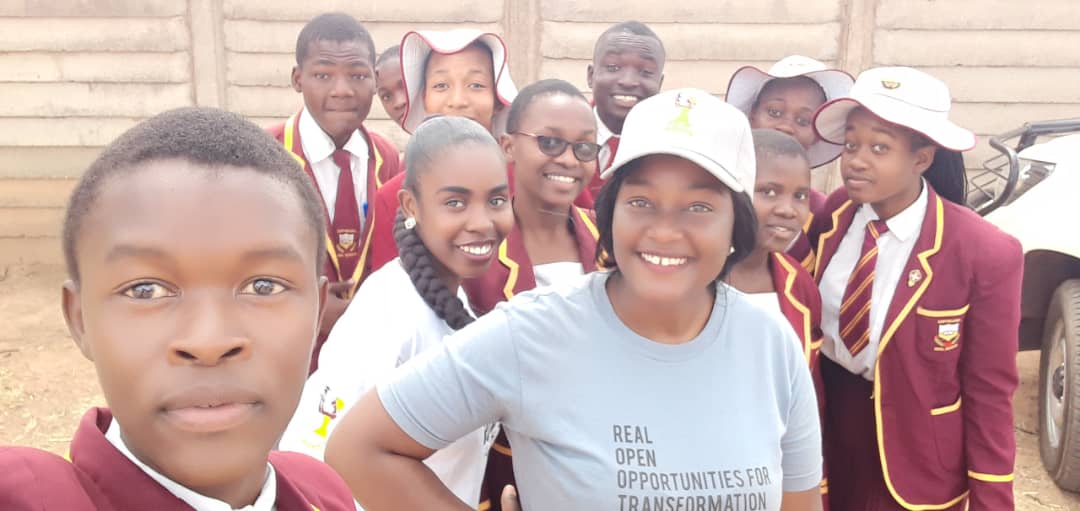
As part of the 25th commemorations of the International Day of the Girl Child, ROOTS in partnership with Higher Life Foundation hosted a colorful event for young people at Tendai Hall in Bindura on the 11th of October 2019. The event was well attended with over 500 Adolescents and Young People from schools within the district. A number of ROOTS’ key stakeholders including ZNFPC, Child Line, NAC were also in attendance and contributed to the program in form of motivational as well as educational speeches for the young people present, especially the girls.
The program itself was packed with speeches and poems from the young people themselves with the over- arching theme being the importance of the girl child in society. The girls were encouraged to have a positive view of themselves and their future while the young boys present were encouraged to value and respect girls and to also help diminish their current burden within the private sphere/ the home. The most exciting parts of the program were: 1.The quiz on the commemoration and rights of the girl child 2. The dancing segment by several students from the different schools.
The objectives of the day were to celebrate and encourage positive imaging of the girl child, to spread awareness on the recurring negative socio- cultural practices such as child marriages and GBV and facilitate a positive shift in beliefs and norms and to empower Young Girls through the promotion of girls’ rights.
The event was spearheaded by two young facilitators and a significant number of performances/ presentations was from young female poets while most presentations encouraged girls to be confident and to positively view themselves. The importance of education was a recurring theme and finally the partnership between ROOTS and Higher Life Foundation once again proved to be a fruitful one.


